
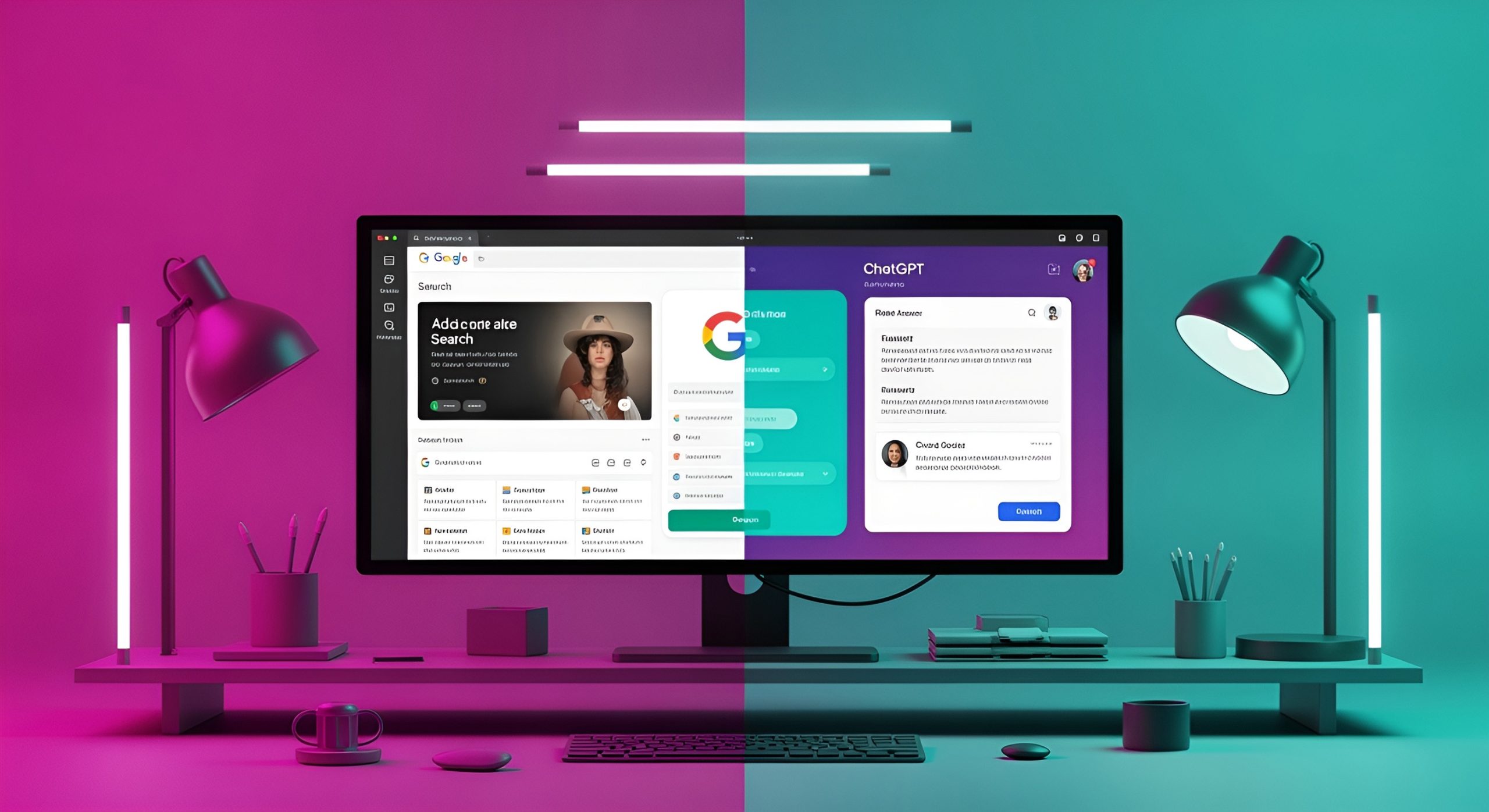
For as long as I can remember, Google was my default. Not just in the practical sense of being the search engine I used, but in the deeper sense of being the foundation of how I found information online. Setting up a new PC? First thing I did was install Chrome and set Google as the default search engine. Accidentally end up on Bing? Immediate frustration followed by a swift exit. Google was simply better.
But now, for the first time in two decades, I’m straying. And I’m not alone.
Something has changed. Not with me—but with search itself.
AI is Changing How I Search
Over the past year, I’ve noticed something I never thought would happen: I’m reaching for AI-powered search tools more than I am for Google. And here’s the kicker—I don’t even feel bad about it. It’s not some rebellious attempt to break free from Google’s grasp; it’s just that AI-powered alternatives are more useful in certain situations.
The Two AI Systems Pulling Me Away From Google
It’s not just one system that’s changing my habits—it’s two.
ChatGPT – This is my go-to for high-importance, professional-level tasks. Whether I need in-depth research, structured information, or help refining ideas, ChatGPT feels like an extension of my own brain. It doesn’t just fetch links—it synthesises information and helps me think better.
Grok – While ChatGPT is my workhorse for serious tasks, Grok has become my quick-answer tool. If I have a simple, casual question, Grok tends to handle it with a bit more personality, and sometimes that’s exactly what I need.
And here’s the twist—I still don’t use Bing. Despite Microsoft’s investment in AI and its push to make Bing an AI-powered alternative, it still hasn’t become part of my routine. That alone says something about how people truly adopt new search habits.
Why AI Search Feels Different (And Better)
1) Conversational and Contextual
Google is still fundamentally a list of links. Even with its AI-powered Search Generative Experience (SGE), it feels like Google is bolting AI onto an outdated model, rather than redefining search itself.
Meanwhile, AI search tools like ChatGPT and Grok feel truly conversational. I can ask a question, get an answer, refine it, and dig deeper without having to rephrase my search terms five different ways.
2) More Signal, Less Noise
Google has made huge improvements to filter out low-quality content, but search results are still filled with distractions—ads, SEO-heavy content, and ranking-focused articles that don’t always put user needs first. AI-powered tools, on the other hand, cut straight to the point, offering answers without the need to sift through multiple sources.
3) AI Understands My Intent Better
Google still relies on me to refine my search queries, click through sites, and piece together information manually.
AI-driven search does that work for me—it synthesises information into useful responses and even anticipates follow-up questions.
The Bigger Question: What Happens Next?
This shift in search behaviour doesn’t just impact users—it has huge implications for companies like Google, Microsoft, and X (formerly Twitter). Right now, all these companies are competing to be the new top dog in AI search, but once the dust settles and a couple of them emerge as dominant players, they’ll have to figure out how to monetise this new world.
1) AI Relies on the Web—But What If People Stop Creating Content?
AI search is built on existing human-created content. It doesn’t generate new knowledge—it reorganises and summarises what’s already available. But if traditional websites stop getting traffic because AI is answering questions directly, what happens when content creators stop producing information in the first place?
Will AI eventually start feeding on its own AI-generated content? Will the web start to collapse in on itself as fewer people see value in producing content for no reward? This is a real risk, and one that search engines (AI-powered or not) will have to grapple with.
2) If Google’s Ad Revenue Declines, What Happens to Search?
Google’s business model is built on ads—billions of dollars depend on people clicking links. But if AI search reduces clicks, then Google has to either fundamentally rethink how it monetises search or find new ways to keep users engaged within Google’s ecosystem.
This is where AI monetisation becomes an issue. AI tools right now are largely ad-free (or hidden behind paywalls), but at some point, businesses will have to make money. If Google’s ad revenue starts to decline, we could see a shift where:
- AI-generated search results prioritise Google-owned content (YouTube, Google News, etc.) to keep users from leaving.
- AI-powered tools start subtly steering users toward paid recommendations.
- Google leans more into subscriptions for AI-powered search.
3) Will AI-Powered Search Eventually Become Ad-Driven?
Right now, AI search feels clean and ad-free, but that won’t last forever. Not everyone is going to want to pay for premium AI services, and companies need a way to make money. At some point, we might start seeing:
- AI-generated sponsored results
- Product recommendations subtly woven into AI responses
- Subscription models pushing users toward paid versions with fewer ads
It’s only a matter of time before the companies behind AI search shift from growth mode to profit mode. Right now, they’re all fighting for dominance. But once a clear leader emerges, the real money-making strategies will begin.
Final Thoughts
If you told me five years ago that I’d be moving away from Google, I would have laughed. But here we are. AI search is changing my habits, and I suspect I’m not the only one.
This isn’t just about personal preference—it’s about a fundamental shift in how people find information. And beyond that, it’s about how companies will adapt to this shift and how they’ll eventually monetise AI search.
Right now, AI search feels fresh, efficient, and exciting. But in the long run, the same companies that are giving us ad-free, streamlined results will inevitably have to turn on the revenue taps.
The question is—will Google adapt, or will AI search finally break its dominance?
